What Is Sclerotherapy and How Does It Work?
Quick Summary
Closes Problem Veins at the Source — Sclerotherapy works by injecting a medical solution into damaged veins, causing them to collapse, seal shut, and disappear naturally over time.
Improves Both Appearance and Circulation — By removing faulty veins, blood is redirected into healthier veins, reducing visible spider and varicose veins while improving blood flow.
Minimally Invasive and Office-Based — The procedure is performed in a clinic setting with no surgery, no anesthesia, and no downtime required for most patients.
Highly Effective for Spider and Small Varicose Veins — Sclerotherapy is one of the most proven treatments for spider veins and mild to moderate varicose veins.
Backed by Decades of Medical Use — Sclerotherapy has been safely used for over 80 years and remains a gold-standard treatment for cosmetic and functional vein issues.
Spider veins and small varicose veins are extremely common, especially in adults who spend long hours standing, sitting, or dealing with hormonal changes. If you’re searching online for what sclerotherapy is, how sclerotherapy works, or whether there’s a safe way to treat visible veins, you’re in the right place. In this blog, we’ll clearly explain what sclerotherapy is, how it treats vein problems, how it works inside the body, and what actually happens during the procedure, so you can understand the treatment before deciding if it’s right for you.
What Is Sclerotherapy?
Sclerotherapy is a minimally invasive medical treatment designed to eliminate unwanted veins by closing them safely from the inside. It has been used for over 80 years and remains one of the most trusted treatments for spider veins and small to medium varicose veins.
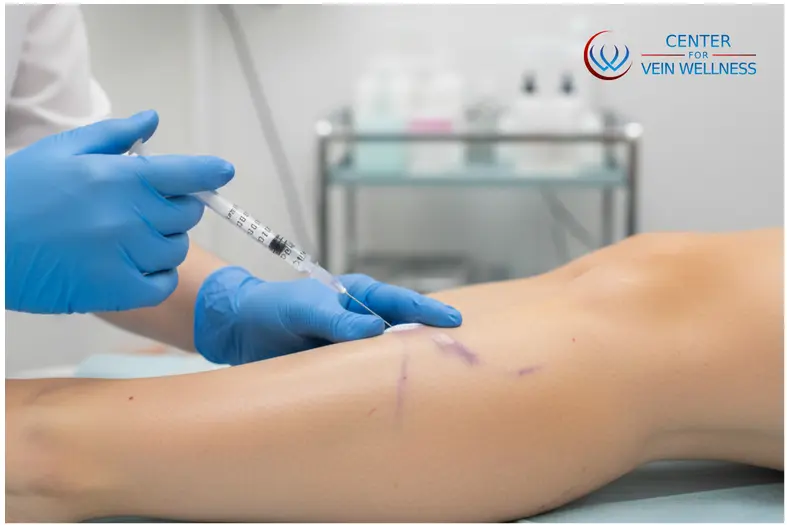
Rather than removing veins surgically, sclerotherapy works by injecting a medical solution called a sclerosant directly into the affected vein. This solution gently irritates the inner lining of the vein, causing it to swell, collapse, and seal shut. Over time, the body naturally absorbs the closed vein and reroutes blood flow through healthier veins.
Because the body no longer uses the treated vein, the visible discoloration fades and circulation improves. This is why sclerotherapy is both a cosmetic and functional treatment, it improves how your legs look and how your veins function.
Unlike surgery, sclerotherapy:
● Requires no incisions or stitches
● Does not need anesthesia
● Is performed in a medical office
● Allows patients to walk immediately afterward
That’s why it’s often called a “lunchtime procedure”, it’s quick, convenient, and effective.
How Does Sclerotherapy Work?
To understand how sclerotherapy works, it helps to first understand why spider veins and varicose veins appear.
Veins carry blood back to the heart using tiny one-way valves. When these valves weaken or fail, blood flows backward and pools inside the vein. This increased pressure stretches the vein walls, making them visible on the skin’s surface as spider veins or bulging varicose veins.
Sclerotherapy works by intentionally closing the faulty vein so blood can no longer pool inside it.
Here’s what happens inside your body:
- The sclerosant solution damages the inner lining of the vein.
- The vein walls stick together and seal closed.
- Blood flow stops in that vein.
- The body recognizes the closed vein as unnecessary.
- The vein is slowly absorbed and removed by the body’s natural processes.
Once that happens, blood is redirected to nearby healthy veins with functioning valves. This improves overall circulation and reduces pressure buildup in the vein system.
So when people ask how does sclerotherapy work, the simple answer is:
It shuts down damaged veins so healthy veins can take over, safely and naturally.
Sclerotherapy for Varicose Veins and Spider Veins
Sclerotherapy for varicose veins and spider veins is especially effective for small to medium-sized veins close to the skin’s surface. It’s commonly used to treat:
● Spider veins (thin red, blue, or purple web-like veins)
● Reticular veins (slightly larger blue-green veins)
● Mild to moderate varicose veins
While larger varicose veins may require different or additional treatments, sclerotherapy remains one of the most popular options because it delivers visible improvement without surgery.
Why it works so well for visible veins:
● The sclerosant directly targets the problem vein
● The treatment is precise and localized
● It does not affect surrounding healthy veins or tissues
● Multiple veins can be treated in a single session
Many patients choose sclerotherapy not only to improve the appearance of their legs but also to reduce symptoms like heaviness, fatigue, or mild aching that can come from vein pressure.
If you’d like to explore professional treatment options in more detail, you can visit the dedicated sclerotherapy service page for a full overview of how the treatment is offered in a clinical setting.
What Happens During a Sclerotherapy Procedure?
A sclerotherapy session is usually done in a doctor’s office and takes about 20–45 minutes, depending on the number of veins treated.
Step-by-step process:
- The treatment area is cleaned.
- A very fine needle is used to inject the sclerosant solution into the vein.
- You may feel a mild pinch or burning sensation that lasts a few seconds.
- The vein gradually collapses as the solution works.
- Compression stockings may be applied afterward.
There is no anesthesia required, and you can walk immediately after the procedure.
Is Sclerotherapy Painful?
Most patients describe sclerotherapy as mildly uncomfortable but not painful. You may feel a small pinch during the injection, followed by a brief burning or tingling sensation, and sometimes mild itching or cramping for a few minutes afterward. These sensations typically fade quickly, and the procedure is generally well tolerated without the need for pain medication or sedation.
Conclusion
Understanding what sclerotherapy is, how sclerotherapy works, and how it treats spider and varicose veins can help you make an informed decision about your vein health. By safely closing damaged veins and allowing the body to naturally absorb them, sclerotherapy offers a simple, effective, and minimally invasive way to improve both appearance and circulation.
If you’re considering treatment or want personalized advice based on your vein condition, the next step is to speak with a vein specialist. You can request more information or book a consultation through the Contact Us page and get expert guidance on whether sclerotherapy is right for you.