Blog

EXCLUSIVELY DEVOTED & FOCUSED ON VENOUS DISEASE

When Are Varicose Veins Dangerous? Warning Signs to Know

Quick Summary

  1. Varicose veins can be harmful if they cause discomfort, edema, skin changes or ulceration.
  2. You may experience a feeling of heaviness and discomfort in your legs and just don’t feel right. It may be a symptom that your vascular disease is getting worse.
  3. If the limb suddenly expands, gets red or heated, a fast evaluation is required.
  4. If left untreated, varicose veins can lead to complications including blood clots or skin ulcers.
  5. Treating it early may help to prevent long term damage to the veins.

Varicose veins is a common condition that affects millions of individuals worldwide. They are generally bulging, twisted or enlarged veins that can be seen under the skin, commonly in the legs and feet. Though varicose veins are often thought of as a cosmetic issue, they may also be an indication of a more serious circulation condition that requires treatment.

Not all varicose veins are dangerous, but there are several indicators and changes that should never be ignored. Knowing whether to be concerned about varicose veins might help you avoid problems and improve your overall vein health.
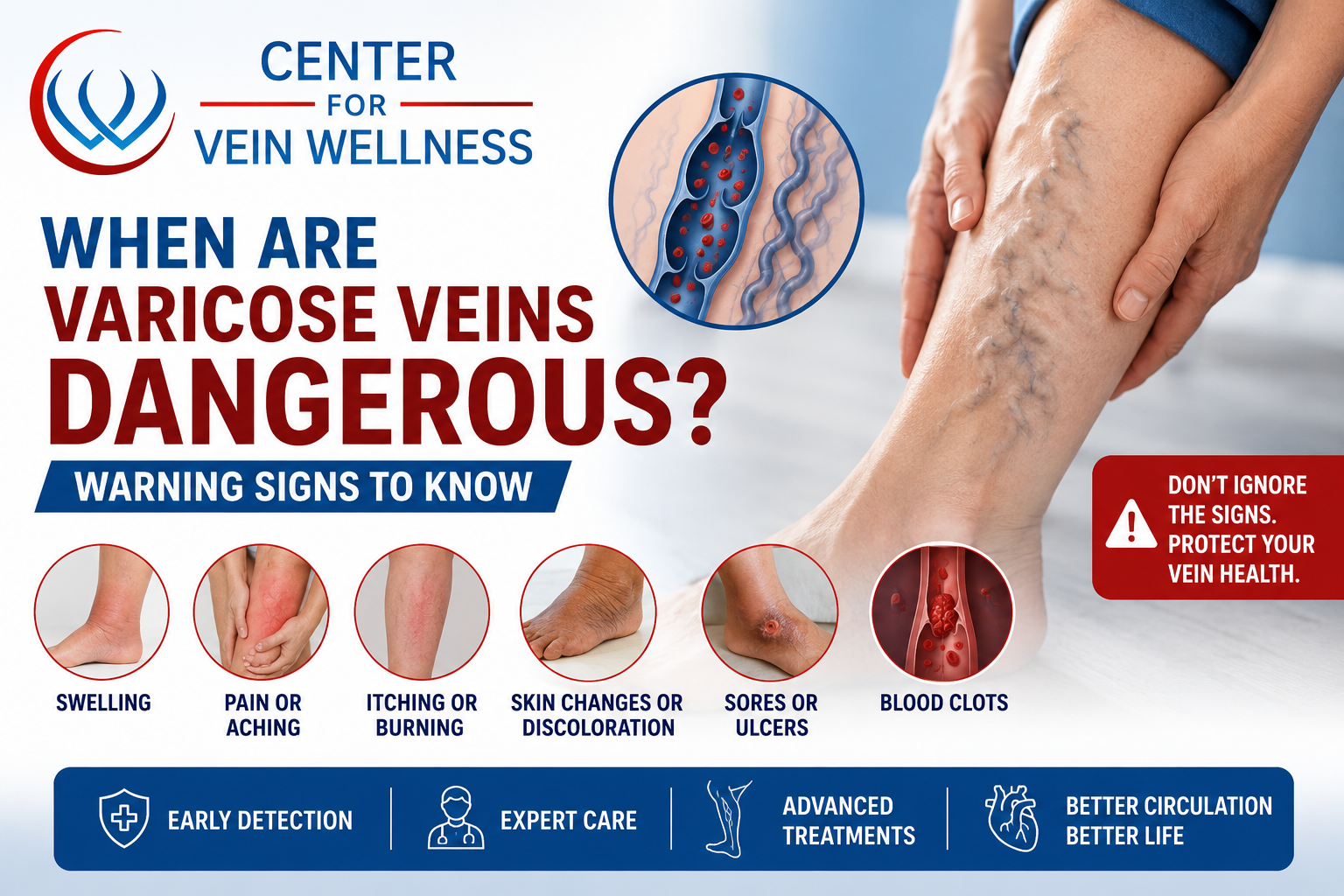
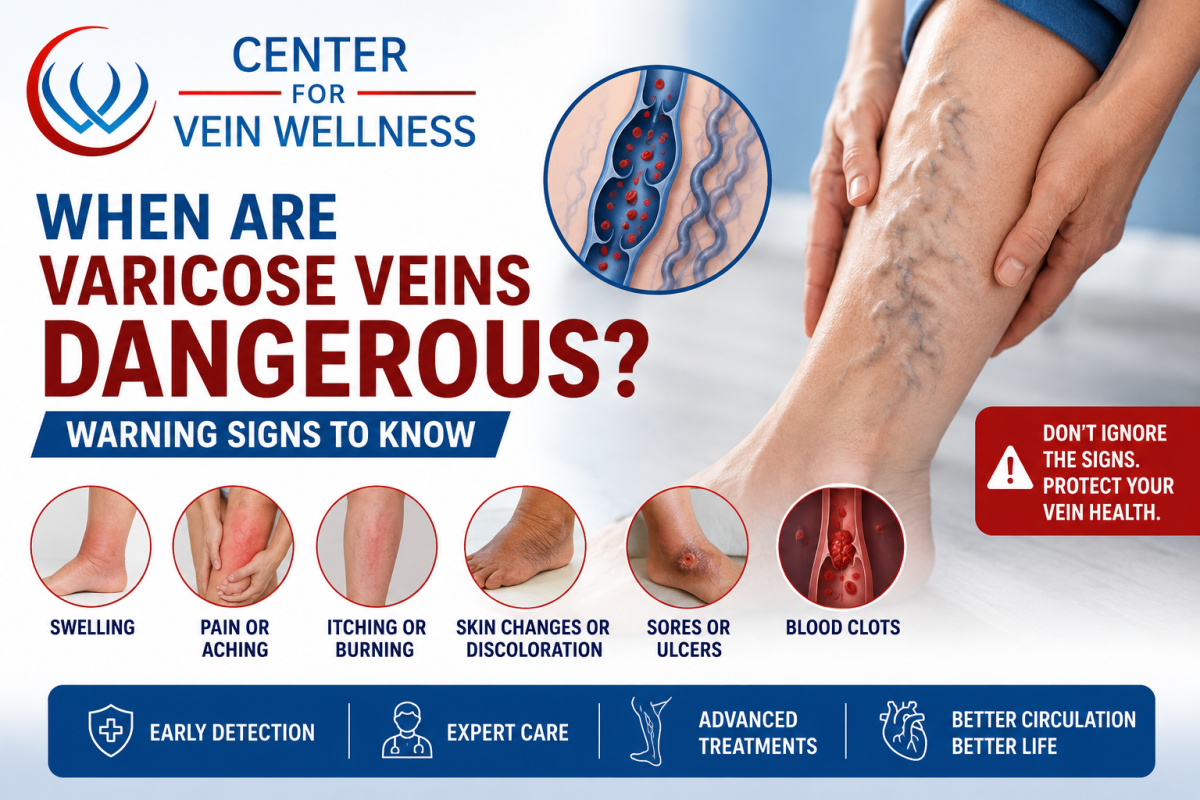
When varicose veins are dangerous warning signs including swelling, pain, skin discoloration, ulcers, and blood clots

How Varicose Veins Can Become Dangerous

Varicose veins occur when the valves in the veins become weak or damaged. These valves generally let blood flow solely upward toward the heart. If they cease working correctly, blood can gather inside the veins and make them bigger and twisted.

Varicose veins are particularly common in the legs because standing and walking increases pressure in the veins of the lower body.

Aging Causes Vein Weakness

With age veins become less flexible and that can lead to valve problems.

Genetic History of Vein Disease

Genetics can have a big role in developing venous illness.

Pregnancy and Pressure in the Veins

Pregnancy can increase blood volume and hormones that might increase the strain on the veins.

Prolonged Standing or Sitting

Jobs or lifestyles that require standing or sitting for lengthy durations might exert pressure on the veins.

Obesity and Poor Blood Circulation

Extra weight puts pressure on your veins and could be damaging your circulation.

Symptoms may worsen if not treated, but many cases are mild.

Signs That Varicose Veins Are Getting Worse

There are various warning flags that may mean that the issue is getting worse but not all varicose veins need urgent treatment.

Persistent Leg Pain or Throbbing

Varicose veins can be mildly painful, especially when standing for long periods of time. But don’t ignore any discomfort that remains, pulses or aches.

Pain may worsen:

  • At the end of the day
  • After long periods of standing
  • In warm weather
  • After exercising

The reason for long-lasting pain can be poor circulation of blood or increased pressure in the veins.

Swelling in the Legs or Ankles

Swelling is one of the most common indications of progressive venous illness. The blood has a difficult time returning to the heart efficiently and fluid begins to build up.

You might see:

  • Swollen ankles
  • Tightness in the calf
  • Puffiness that increases during the day

Swelling might interfere with movement and comfort in your day-to-day life.

Burning or Itching Around the Veins

Sometimes itchy or sensitive skin over varicose veins can indicate inflammation.

Other symptoms experienced by people are:

  • Burning feelings
  • Tingling sensation
  • Night cramps
  • Skin sensitivity

These symptoms could be a sign of chronic vein problems that need to be addressed by a clinician.

Serious Complications of Varicose Veins

Certain varicose vein conditions require prompt treatment.

Skin Thickening or Color Changes

Poor circulation can eventually affect the skin around the veins.

You could see:

  • Brown or red discoloration
  • Dry or chapped skin
  • Thickened regions around the ankles

The change may permanently damage the vein.

Open Sores or Leg Ulcers

Venous ulcers are one of the most important consequences of varicose veins which can develop if left untreated.

These lesions often appear as:

  • Around the ankles
  • On swollen areas of the leg
  • In areas of skin discoloration

Left untreated, venous ulcers can be slow to heal and can get infected.

Bleeding Varicose Veins

Sometimes varicose veins close to the surface of the skin can break and bleed. The veins are large and under pressure, so even small cuts or bruises can bleed heavily.

If bleeding:

  • Doesn’t stop easily
  • Happens repeatedly
  • Is related with pain or swelling

Medical attention may be needed.

Signs That Require Immediate Medical Attention

Some symptoms can be a sign of a more serious circulation or blood clot problem.

Sudden Swelling of One Leg

Swelling, soreness or warmth in one leg might be a sign of a blood clot, such as deep vein thrombosis (DVT).

A blood clot that breaks free and travels to the lungs can be hazardous.

Redness and Warmth Around the Vein

The veins could become irritated and get:

  • Tender
  • Red
  • Warm

This may be an indication of superficial thrombophlebitis or another vein problem.

Heavy or Tired Feeling in the Legs

Heavy legs can indicate chronic venous insufficiency, a disease where blood has difficulty returning via the veins.

Symptoms may include:

  • Sore legs
  • Restlessness
  • Muscle cramps
  • Difficulty standing for extended periods

These symptoms typically worsen with time.

When to Visit a Vein Specialist

If your varicose veins are starting to impact your everyday life or you are seeing indicators of complications, you should seek medical treatment.

Symptoms Deteriorate Over Time

If you are not responding to lifestyle modifications with your symptoms, you need to consult a specialist for an evaluation.

Signs are:

  • Increased swelling
  • Chronic pain
  • Enlarged veins
  • Skin changes

Frequent Leg Cramps

In vein disease, circulation issues may lead to frequent nocturnal cramps or muscle tightness.

Visible Skin Damage

Call your doctor right away if you notice any changes in your skin color or texture or any sores.

When Conservative Treatments Don’t Work

Some people do try:

  • Exercise
  • Compression stockings
  • Raising legs
  • Weight management

If these procedures do not help your symptoms, you may require other treatment.

Benefits of Treating Varicose Veins Early

Treating varicose veins early can help:

  • Boost circulation
  • Reduce discomfort
  • Avoid complications
  • Improve skin health
  • Support daily movement

Today many vein operations are minimally invasive and may require little recovery time. Early diagnosis also helps to evaluate whether the symptoms are related to more advanced vascular disease.

Conclusion

When the symptoms start to become worse, varicose veins may not always be harmful but they should never be neglected. Sudden changes in your legs, such as pain, swelling, skin discoloration or ulceration, may be a sign that you have a more serious vein disease that needs medical treatment.

Being aware of when to concern about varicose veins can assist reduce complications and encourage long-term vein health. The sooner you find out the better the treatment and the easier your life will be before your symptoms worsen.
Frequently Asked Questions

When Are Varicose Veins Dangerous? Warning Signs to Know

No, many varicose veins are mild and largely cosmetic. But some cases can lead to pain, swelling, ulcers or problems with circulation.
Seek medical attention for severe pain, swelling, changes in skin, bleeding, or sudden redness and warmth in the leg.
Yes, varicose veins that are not treated can get progressively worse and increase the risk of complications such as ulcers or blood clots.
In some situations vein disease can raise the risk of clot-related conditions, particularly if symptoms include sudden swelling or tenderness.
Inflammation and poor circulation around the affected veins can cause itching and burning.
Persistent swelling in the legs or ankles can be a sign of worsening vein disease and should be checked out.
Exercise, compression stockings, leg elevation and maintaining a healthy weight may help reduce symptoms in some people.

Are Spider Veins on the Chest a Sign of  Health Problem?

Quick Summary

  1. Spider veins on the chest are usually not dangerous and are only for looks.
  2. They happen when little blood vessels are weak or broken.
  3. Aging, hormones, heredity, and being in the sun are all common factors.
  4. They may need to see a doctor if symptoms show up in some circumstances.
  5. There are therapies that are safe and work if you need them.

A lot of folks see small red or blue veins on their chest and worry right away. Spider veins are veins that can look strange and show up out of nowhere. So the key question is: Do spider veins on the chest mean there is a health problem?

Most of the time, the answer is no. Most of the time, they don’t hurt you and merely change how you look. But in some cases, they could mean that your body needs help. Knowing what they are and when to worry can help you stay calm and do the correct thing.

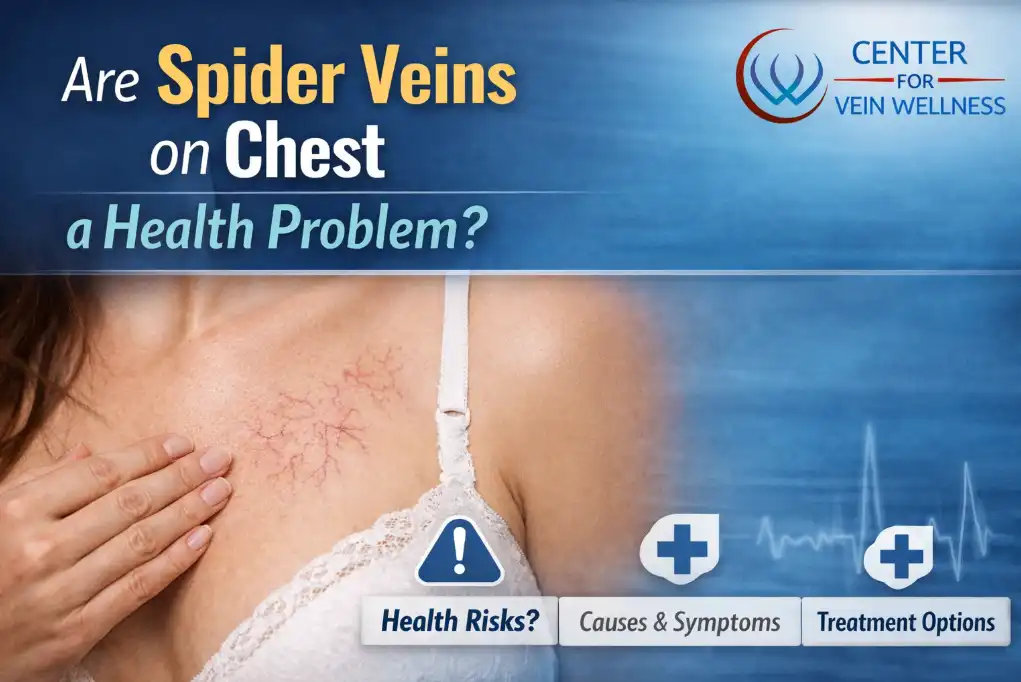
Are spider veins on chest a health problem with visible chest veins and treatment options – Center for Vein Wellness

What Are Spider Veins on the Chest?

Spider veins are tiny blood vessels that show up just under the skin. They can be red, blue, or purple and seem like thin lines or a web pattern. They are easier to see on the chest since the skin is thinner. Spider veins don’t stick out or swell up like varicose veins do. Most of the time, they don’t hurt, although some people may feel a little uncomfortable. When the small valves inside blood vessels cease working right, these veins arise. This makes the veins prominent and causes blood to pool.

What Makes Spider Veins Appear on the Chest?

There are a few typical reasons why spider veins show up on the chest.

1. Sunlight

Too much sun can hurt your skin and make small blood vessels weaker. This makes veins more noticeable over time.

2. Changes in hormones

Hormones are very important, especially for women. Pregnancy, menopause, or birth control medications can change how blood flows and cause spider veins.

3. Getting older

Your skin gets thinner and weaker as you get older. This makes it simpler to see veins.

4. Genetics

You are more likely to have spider veins if someone in your family has them.

5. Things that affect your lifestyle

  ● Standing or sitting for a long time

  ● Not getting enough exercise

  ● Gaining weight

These can change how blood flows and put more stress on veins. Most of these causes are normal and not harmful.

When Should You Be Worried?

You should pay attention to spider veins at times, even if they are usually not dangerous.

Warning Signs to Watch

  ● A lot of veins suddenly show up

  ● Pain, scorching, or discomfort

  ● Swelling in the area

  ● Changes in the skin or irritation

It’s best to see a doctor if you detect any of these symptoms.

Possible Health Problems (Rare)

In rare circumstances, spider veins may be connected to:

  ● Problems with blood flow

  ● Hormonal imbalance

  ● Problems with the liver

These things don’t happen very often, but it’s always best to be careful.

Is it dangerous to have spider veins on your chest?

Spider veins are not hazardous for most people. They are mostly a cosmetic problem and don’t hurt your health. But if they come with other symptoms, you should see a doctor right away.

Cases that don’t hurt

  ● No pain

  ● Little space

  ● Slow growth

Cases That Need Your Attention

  ● Spreading quickly

  ● Pain or discomfort

  ● Changes in the skin

A doctor can assist you to figure out the exact cause and whether treatment is necessary.

Ways to Treat Spider Veins on the Chest

There are safe ways to treat spider veins if they bother you or become prominent.

1. Sclerotherapy

A simple process in which a solution is put into the veins. This helps them becoming smaller and less noticeable over time.

2. Laser Therapy

Laser therapy employs laser to focus on the veins without hurting the skin. It works great on the chest area.

3. Changes in lifestyle

  ● Keep your skin safe from the sun

  ● Work out often

  ● Keep your weight in check. Get expert help.

It is necessary to talk to a specialist to get the finest results. You may get safe, specialized care for spider veins in Beverly Hills.

How to Keep Spider Veins from Showing Up on Your Chest

By adopting these easy practices, you can lower your risk of having spider veins:

  ● Put on sunblock every day.

  ● Don’t spend too much time in the sun.

  ● Stay active and work out

  ● Eat foods that are good for you.

  ● Drink adequate water. 

These little things can have a tremendous effect.

Conclusion

Spider veins on the chest are prevalent and usually not a big deal. They generally change how you look, and things like sun exposure, aging, or hormones can cause them. But you should keep an eye out for any strange developments. You shouldn’t disregard discomfort, swelling, or quick growth.

Taking care of your skin and health in general can help keep spider veins from forming. Modern therapies can also safely get rid of them if necessary. If you’re worried or want expert help, you can get in touch with the Center for Vein Wellness for a complete diagnosis and treatment.

Frequently Asked Questions

Laser Treatment for Spider Veins Before and After Results

Quick Summary

  1. Laser treatment for spider veins slowly makes visible veins less visible over time, not all at once.
  2. Veins may look darker right after treatment, but they will get better.
  3. Results that are easy to see usually show up in a few weeks.
  4. The final results show that the skin looks clearer and smoother, and the veins are less visible.
  5. Results differ for each person based on their skin type, vein size, and the area being treated.

Spider veins are small blood vessels that are easy to see and often show up on the legs, face, or chest in web-like patterns that many people don’t like or find uncomfortable. More and more people are choosing spider vein treatment in Beverly Hills as a safe and effective way to improve their looks as they learn more about modern treatments. But one of the most common questions people have before getting treatment is what kind of change they will see before and after the procedure. To set the right expectations, you need to know what the real change is, like how the veins look before treatment, how they change right after, and how the skin gets better over time. This article is all about the results of spider vein laser treatment before and after. It will help you understand what changes to expect at every step of the process.

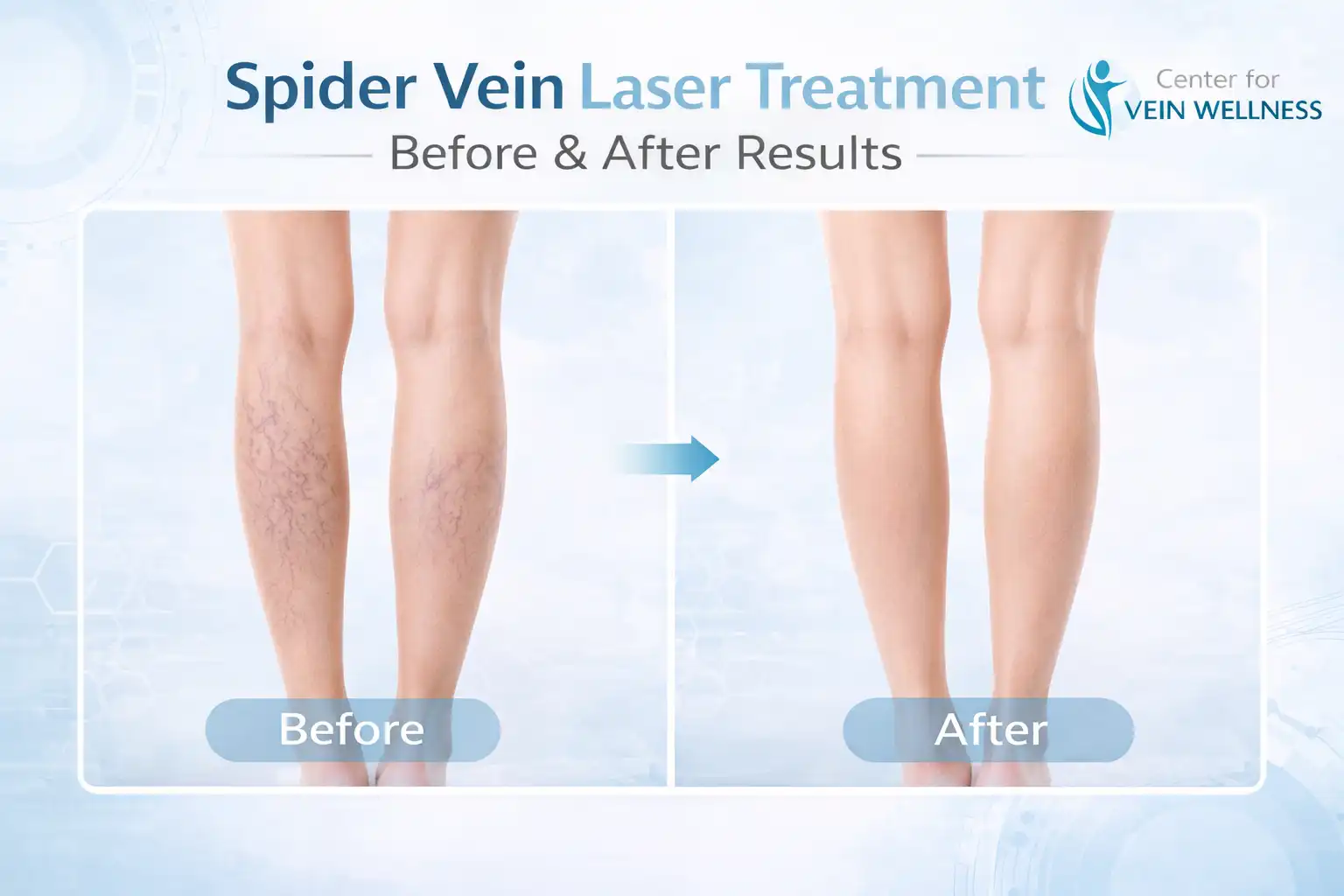
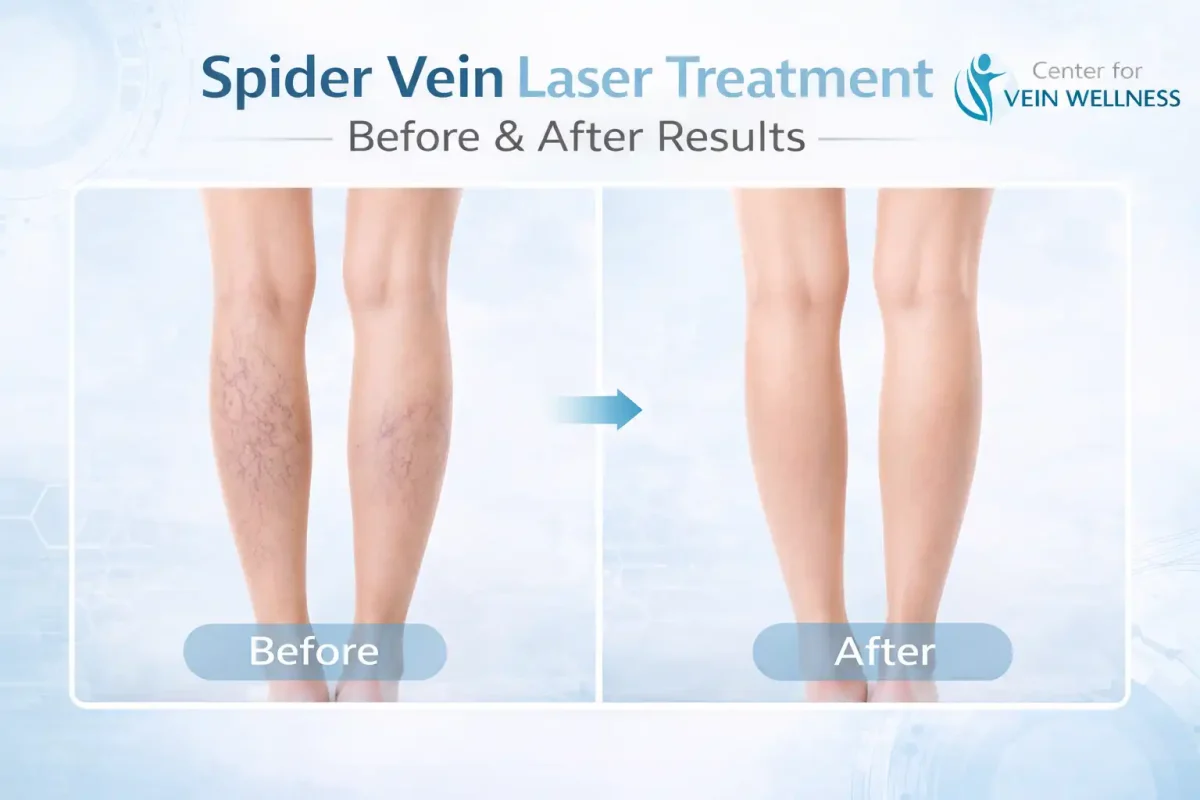
Spider vein laser treatment before and after results showing visible reduction in veins and clearer skin appearance

How Spider Veins Look Before Laser Treatment

Before getting laser treatment, spider veins are usually easy to see on the skin’s surface. They might look like thin red, blue, or purple lines that spread out in a web-like pattern, especially on the thighs, calves, cheeks, or around the nose. They can be very faint and hard to see in some cases, but in others, they can be very noticeable and change the look of the skin as a whole. A lot of people feel bad about these veins, especially when they wear certain clothes or are in social situations where their skin is more exposed.

The way spider veins look before treatment can change based on things like genetics, age, skin tone, and lifestyle choices. Some people may see their veins grouped together in one spot, while others may see them spread out over a larger area of skin. These veins are often easier to see in bright light or sunlight, which makes them harder to ignore. This “before” stage shows the veins in their natural state, with no treatment, so it’s easy to see how much better they look after laser treatment.

What Happens Immediately After Laser Treatment

The area that was treated with lasers may not look like the final results right away. It is actually very common for the veins to look a little darker or more prominent than they did before. This happens because the laser energy has hit the blood vessels, which makes them react and start to break down. It is normal for the skin around the treated area to look a little red or swollen, and this usually goes away on its own.

Many people may be unsure at this point because they can’t see the results right away. This step is an important part of the treatment process, though, because it shows that the laser has successfully targeted the veins. The treated veins are no longer working the same way, and the body is starting to get rid of them on its own. The “immediate after” stage isn’t about seeing changes right away; it’s about the changes that happen inside that lead to long-term results.

Spider Vein Laser Treatment Results Timeline

The results of spider vein laser treatment take time to show, and knowing this timeline can help you avoid having unrealistic hopes. In the first few days after treatment, the veins may still be visible and, in some cases, a little darker than before. This is completely normal and part of the process of getting better. The treated veins start to break down over time, and small changes start to happen.

A lot of people notice that their veins are getting lighter and less noticeable in the first two to three weeks. The skin may start to look more even, and the web-like patterns may start to fade. At this point, it’s important to be patient because the results will come over time.

The change is easier to see after four to six weeks. Some areas of the treated veins may be much less visible or may have completely faded. People with more than one or larger vein may need more sessions to get the best results. The skin keeps getting better over time, making it look clearer and smoother.

What to Expect Before and After Results

The most important part of this treatment is that you can see a difference between the before and after stages. Before treatment, the veins are easy to see and often draw attention to themselves, which can change the way the skin looks overall. After finishing the treatment, the skin looks much clearer, with veins that are less visible or completely gone.

After the treatment, the area usually looks smoother and more even in tone. The web-like patterns that used to be there are either much less visible or not visible at all. This change can boost confidence a lot, especially for people who were shy about showing off certain parts of their skin before.

You should know that results may not always be perfect in one session. Some veins may need more than one treatment, and the level of improvement can be different for each person. Most people, on the other hand, can see a clear difference in their skin before and after laser treatment. The main goal is not just to get rid of veins, but also to make the skin look and feel better.

Things That Can Change Your Results Before and After

Laser treatment for spider veins works, but the final results depend on a number of things that are unique to each person. The size and depth of the veins are two of the most important things. Smaller and more superficial veins usually respond to treatment faster, while larger veins may take longer to fade and need more than one session.

The treatment works differently on different skin types, and the results look different on different skin types as well. People with lighter skin tones may see changes more quickly, while those with darker skin tones may see changes more slowly over a longer period of time. Lifestyle factors like exercise, standing for long periods of time, and blood flow can also affect the results.

Another important thing is how regular the treatment sessions are. Some people get the results they want after one session, while others need several sessions over time. Following the recommended treatment plan helps make sure that the results are better and more noticeable before and after.

Last but not least, expectations are very important. People can be patient and happy with the slow progress they see if they understand that results take time and can be different.

Conclusion

Laser treatment for spider veins makes a big difference in the way the skin looks, but the changes happen slowly over time. You can have a clear and realistic idea of what to expect from the process if you know what spider veins look like before treatment, what happens right after, and how they fade over time. The difference between the before and after stages often shows skin that is smoother and clearer, with veins that are much less visible. This can help both your looks and your confidence. If you’re thinking about getting treatment, talking to experienced doctors at the Center for Vein Wellness can help you learn about your options and get the best results for your specific needs.

Frequently Asked Questions

Laser Treatment for Spider Veins Before and After Results

Most people start to see changes two to three weeks after treatment, but it usually takes four to six weeks or longer to see all the changes. The body slowly breaks down and absorbs the treated veins, which leads to gradual improvement.
After the procedure, treated veins may look darker than usual. This happens because the laser has hit the blood vessels, and the body is now starting to break them down. This short-term change is a normal part of the healing process.
Smaller veins may fade after just one session, but most people need more than one session to get the best results. The number of sessions depends on how big, where they are, and how bad the veins are.
Most of the time, the treated veins don't come back. However, new spider veins can form over time because of things like genetics, lifestyle, and getting older. Taking care of your veins in general can help keep new veins from forming.
Laser treatment works best on small spider veins on the face, chest, and legs. The results may be different depending on the area and the type of veins being treated.
Yes, the treatment's goal is to make your skin look natural and even. When the veins fade, the skin looks clearer and there are no visible marks or scars.
Yes, a lot of clinics suggest taking pictures before treatment starts so you can easily see how things have changed over time. This helps you keep track of your progress and see how well the treatment is working.