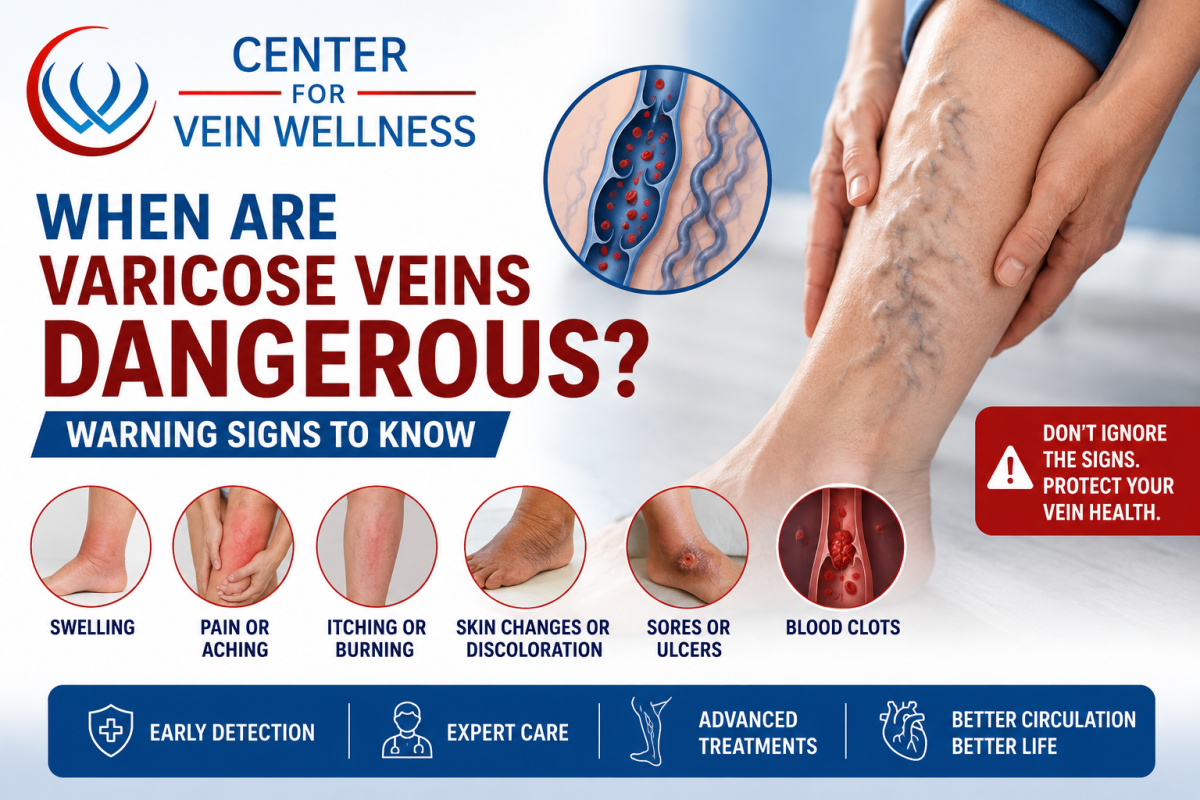
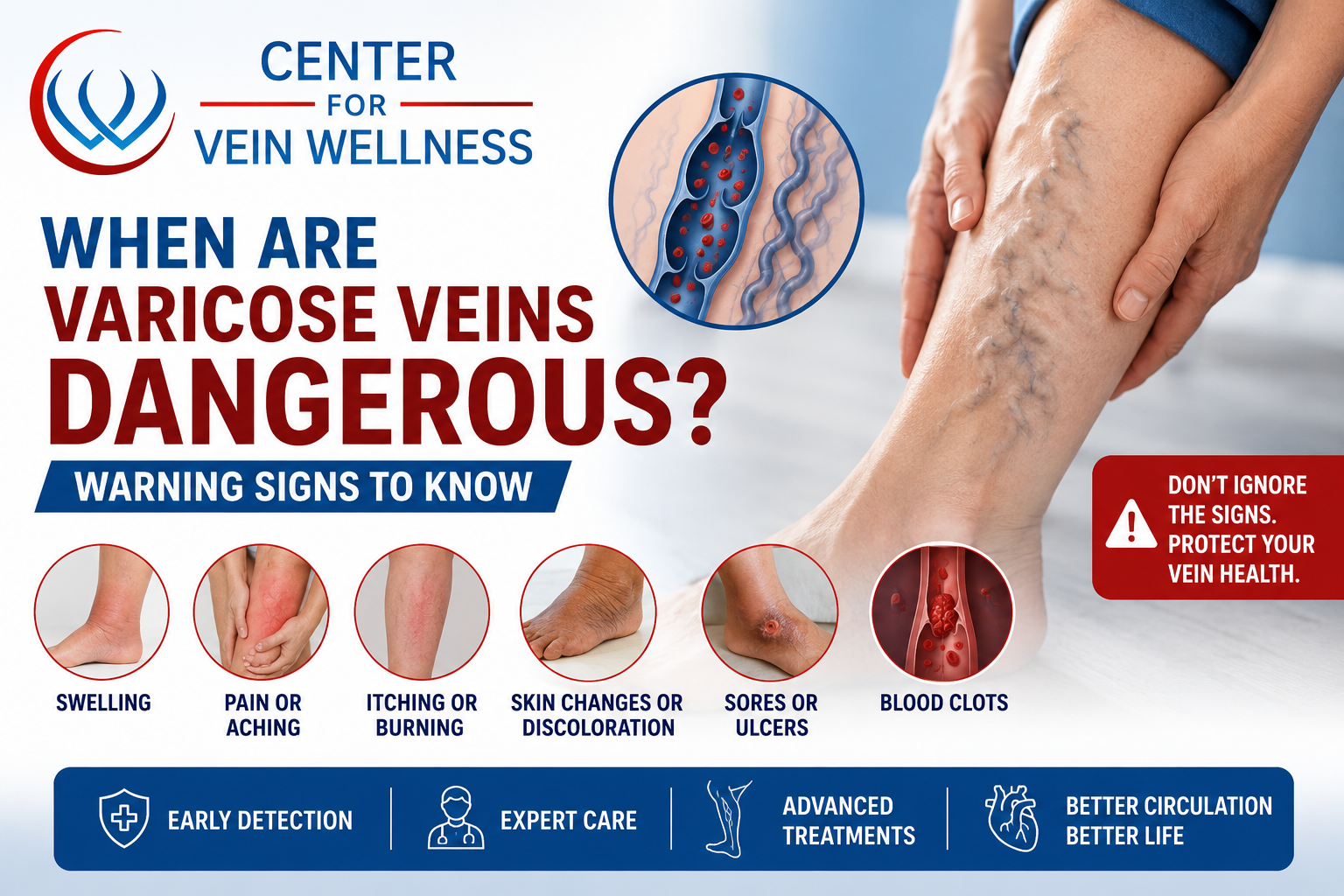
When Are Varicose Veins Dangerous? Warning Signs to Know
Quick Summary
- Varicose veins can be harmful if they cause discomfort, edema, skin changes or ulceration.
- You may experience a feeling of heaviness and discomfort in your legs and just don’t feel right. It may be a symptom that your vascular disease is getting worse.
- If the limb suddenly expands, gets red or heated, a fast evaluation is required.
- If left untreated, varicose veins can lead to complications including blood clots or skin ulcers.
- Treating it early may help to prevent long term damage to the veins.
Varicose veins is a common condition that affects millions of individuals worldwide. They are generally bulging, twisted or enlarged veins that can be seen under the skin, commonly in the legs and feet. Though varicose veins are often thought of as a cosmetic issue, they may also be an indication of a more serious circulation condition that requires treatment.
Not all varicose veins are dangerous, but there are several indicators and changes that should never be ignored. Knowing whether to be concerned about varicose veins might help you avoid problems and improve your overall vein health.
How Varicose Veins Can Become Dangerous
Varicose veins occur when the valves in the veins become weak or damaged. These valves generally let blood flow solely upward toward the heart. If they cease working correctly, blood can gather inside the veins and make them bigger and twisted.
Varicose veins are particularly common in the legs because standing and walking increases pressure in the veins of the lower body.
Aging Causes Vein Weakness
With age veins become less flexible and that can lead to valve problems.
Genetic History of Vein Disease
Genetics can have a big role in developing venous illness.
Pregnancy and Pressure in the Veins
Pregnancy can increase blood volume and hormones that might increase the strain on the veins.
Prolonged Standing or Sitting
Jobs or lifestyles that require standing or sitting for lengthy durations might exert pressure on the veins.
Obesity and Poor Blood Circulation
Extra weight puts pressure on your veins and could be damaging your circulation.
Symptoms may worsen if not treated, but many cases are mild.
Signs That Varicose Veins Are Getting Worse
There are various warning flags that may mean that the issue is getting worse but not all varicose veins need urgent treatment.
Persistent Leg Pain or Throbbing
Varicose veins can be mildly painful, especially when standing for long periods of time. But don’t ignore any discomfort that remains, pulses or aches.
Pain may worsen:
- At the end of the day
- After long periods of standing
- In warm weather
- After exercising
The reason for long-lasting pain can be poor circulation of blood or increased pressure in the veins.
Swelling in the Legs or Ankles
Swelling is one of the most common indications of progressive venous illness. The blood has a difficult time returning to the heart efficiently and fluid begins to build up.
You might see:
- Swollen ankles
- Tightness in the calf
- Puffiness that increases during the day
Swelling might interfere with movement and comfort in your day-to-day life.
Burning or Itching Around the Veins
Sometimes itchy or sensitive skin over varicose veins can indicate inflammation.
Other symptoms experienced by people are:
- Burning feelings
- Tingling sensation
- Night cramps
- Skin sensitivity
These symptoms could be a sign of chronic vein problems that need to be addressed by a clinician.
Serious Complications of Varicose Veins
Certain varicose vein conditions require prompt treatment.
Skin Thickening or Color Changes
Poor circulation can eventually affect the skin around the veins.
You could see:
- Brown or red discoloration
- Dry or chapped skin
- Thickened regions around the ankles
The change may permanently damage the vein.
Open Sores or Leg Ulcers
Venous ulcers are one of the most important consequences of varicose veins which can develop if left untreated.
These lesions often appear as:
- Around the ankles
- On swollen areas of the leg
- In areas of skin discoloration
Left untreated, venous ulcers can be slow to heal and can get infected.
Bleeding Varicose Veins
Sometimes varicose veins close to the surface of the skin can break and bleed. The veins are large and under pressure, so even small cuts or bruises can bleed heavily.
If bleeding:
- Doesn’t stop easily
- Happens repeatedly
- Is related with pain or swelling
Medical attention may be needed.
Signs That Require Immediate Medical Attention
Some symptoms can be a sign of a more serious circulation or blood clot problem.
Sudden Swelling of One Leg
Swelling, soreness or warmth in one leg might be a sign of a blood clot, such as deep vein thrombosis (DVT).
A blood clot that breaks free and travels to the lungs can be hazardous.
Redness and Warmth Around the Vein
The veins could become irritated and get:
- Tender
- Red
- Warm
This may be an indication of superficial thrombophlebitis or another vein problem.
Heavy or Tired Feeling in the Legs
Heavy legs can indicate chronic venous insufficiency, a disease where blood has difficulty returning via the veins.
Symptoms may include:
- Sore legs
- Restlessness
- Muscle cramps
- Difficulty standing for extended periods
These symptoms typically worsen with time.
When to Visit a Vein Specialist
If your varicose veins are starting to impact your everyday life or you are seeing indicators of complications, you should seek medical treatment.
Symptoms Deteriorate Over Time
If you are not responding to lifestyle modifications with your symptoms, you need to consult a specialist for an evaluation.
Signs are:
- Increased swelling
- Chronic pain
- Enlarged veins
- Skin changes
Frequent Leg Cramps
In vein disease, circulation issues may lead to frequent nocturnal cramps or muscle tightness.
Visible Skin Damage
Call your doctor right away if you notice any changes in your skin color or texture or any sores.
When Conservative Treatments Don’t Work
Some people do try:
- Exercise
- Compression stockings
- Raising legs
- Weight management
If these procedures do not help your symptoms, you may require other treatment.
Benefits of Treating Varicose Veins Early
Treating varicose veins early can help:
- Boost circulation
- Reduce discomfort
- Avoid complications
- Improve skin health
- Support daily movement
Today many vein operations are minimally invasive and may require little recovery time. Early diagnosis also helps to evaluate whether the symptoms are related to more advanced vascular disease.
Conclusion
When the symptoms start to become worse, varicose veins may not always be harmful but they should never be neglected. Sudden changes in your legs, such as pain, swelling, skin discoloration or ulceration, may be a sign that you have a more serious vein disease that needs medical treatment.
Being aware of when to concern about varicose veins can assist reduce complications and encourage long-term vein health. The sooner you find out the better the treatment and the easier your life will be before your symptoms worsen.